 By admin
 4 Crucial Early Warning Signs of Breast Cancer You Can’t Afford to Miss
Breast cancer continues to be a prevalent health concern for women globally. While regular screenings often identify cases before any visible or palpable changes manifest, developing an awareness of subtle alterations in your breasts can be profoundly impactful. It’s understandable to feel apprehension when something doesn’t seem right—your body often communicates vital information. The empowering aspect is that recognizing potential changes enables you to proactively manage your well-being. Crucially, certain indicators can emerge gradually, sometimes even preceding the development of an obvious lump. This article will delve into four essential early warning signs, endorsed by reputable health organizations, and conclude with actionable steps you can implement immediately to safeguard your breast health.
Why Early Awareness Matters More Than You Think
In their nascent stages, most breast cancers typically do not present with overt or dramatic symptoms. Leading health organizations, including the American Cancer Society, highlight that advanced screening technologies like mammograms frequently detect abnormalities well before they become perceptible through self-examination. Nevertheless, cultivating a familiarity with the normal appearance and texture of your breasts is instrumental in identifying any unusual patterns early on. Evidence suggests that combining personal awareness with routine medical check-ups significantly improves prognoses when potential changes are promptly investigated. It’s vital to understand, however, that the presence of these signs does not automatically confirm a serious condition, as numerous benign issues can present similarly. The ultimate steps are vigilant observation and subsequent professional medical evaluation. With that in mind, let’s explore the four specific signs that medical experts advise paying close attention to.
1. A New Lump or Thickening in the Breast or Underarm Area
Undoubtedly, one of the most frequently discussed and recognized indicators is the development of a new lump or thickened area within the breast tissue or the underarm region. Both the American Cancer Society and the Mayo Clinic affirm that this is often the initial discovery for many individuals. It’s crucial to remember that not all lumps are malignant; a significant number are benign, such as cysts or fibroadenomas. A suspicious lump might manifest as hard with uneven borders, yet it could also be surprisingly soft, distinctly round, or even sensitive to touch. Its painless nature can sometimes lead to it being dismissed. Therefore, it’s vital to note if this new formation feels distinct from the typical consistency of your breasts. However, it’s imperative to understand that not every detected lump signifies a serious issue. Transient changes, often linked to hormonal shifts, particularly during the menstrual cycle, are common. Nevertheless, any newly identified, persistent lump necessitates a thorough medical evaluation by a healthcare professional.
2. Changes in Breast Size, Shape, or Contour
A noticeable discrepancy where one breast suddenly appears or feels different compared to the other can serve as a significant early indicator. These alterations might encompass:
- Unexplained localized or generalized swelling within the breast.
- A distinct change in its overall size or shape that cannot be attributed to typical factors such as weight fluctuations, pregnancy, or the menstrual cycle.
- Skin dimpling or puckering, often characterized by an appearance similar to an orange peel (peau d’orange).
The Mayo Clinic emphasizes that such visual or tactile variations can originate from underlying tissue modifications. Should one breast unexpectedly develop asymmetry without an apparent cause, close monitoring is warranted. It’s important to recall that some degree of natural breast asymmetry is common; however, a sudden onset or progressive alteration in symmetry is what truly merits attention.
3. Skin Changes or Redness on the Breast
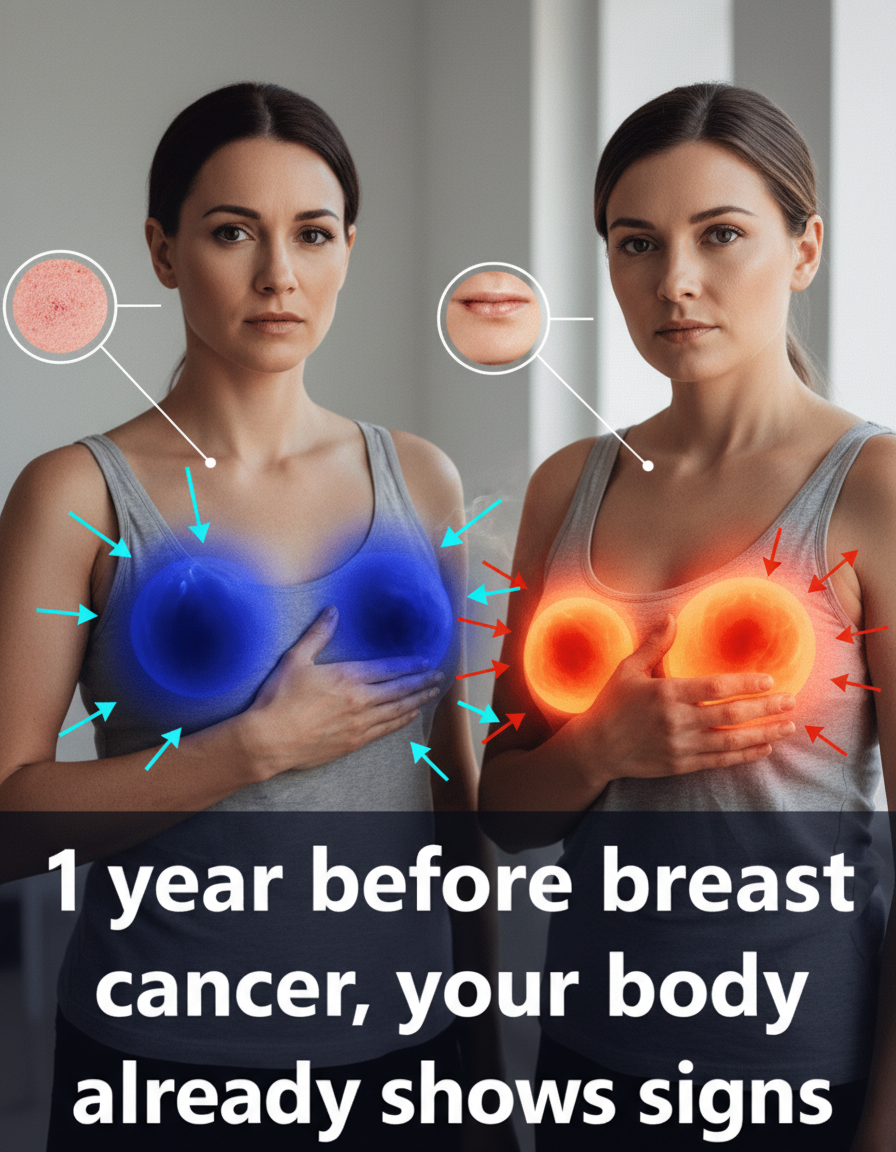
The skin covering your breast can provide crucial insights into its health. Be vigilant for the following manifestations:
- Persistent redness, warmth, or irritation that does not subside.
- A scaling, flaking, or rash-like texture, particularly noticeable in the nipple area.
- Any new dimpling or noticeable thickening of the skin.
While these symptoms might occasionally be misidentified as common infections or allergic reactions, any enduring changes—especially if they predominantly affect one breast—warrant immediate medical consultation. Esteemed organizations such as the CDC and Susan G. Komen underscore that such inflammatory alterations can signify an underlying issue requiring prompt evaluation. These are generally not routine occurrences for most individuals, therefore, it’s crucial not to dismiss them as trivial dermatological concerns.
4. Nipple Changes or Unusual Discharge
Alterations to the nipple, though sometimes subtle, can hold significant implications. Key changes to observe include:
- A nipple that suddenly turns inward or becomes inverted, especially if it was previously everted or flat.
- Unexplained pain, a burning sensation, or persistent tenderness in the nipple region.
- Any spontaneous discharge (occurring without squeezing) that is clear, milky, or, most concerningly, bloody, particularly if it originates from only one breast.
The American Cancer Society advises that while nipple discharge frequently has benign origins (such as hormonal imbalances), the presence of bloody or unprovoked discharge warrants immediate medical attention as a potential red flag. Furthermore, any new inversion or ongoing discomfort in the nipple area should not be disregarded. It’s common for these particular signs to be overlooked, as nipple characteristics can evolve quietly over time.
How to Perform a Simple Breast Self-Awareness Check (Step-by-Step)
Staying proactive about your breast health is straightforward and doesn’t necessitate specialized equipment. Here’s a simple, monthly routine for breast self-awareness, ideally performed a few days after your menstrual period concludes when breasts are typically less tender:
- Visual Inspection: Stand in front of a mirror with your arms at your sides. Observe your breasts for any changes in size, shape, or contour. Look for dimpling, puckering, redness, scaling, or any unusual nipple discharge. Repeat this observation with your arms raised overhead, and then with your hands pressed firmly on your hips, flexing your chest muscles.
- Manual Examination (Lying Down): Lie down on your back with a pillow under your right shoulder. Use the pads of your three middle fingers on your left hand to examine your right breast. Use a firm, smooth touch with the finger pads, keeping them flat and together. Move in a circular pattern, covering the entire breast from top to bottom, side to side, from your collarbone to the top of your abdomen, and into your armpit. Use light, medium, and firm pressure. Repeat for your left breast with your right hand.
- Manual Examination (Standing Up/Shower): Many women find it easiest to perform the manual part of the exam in the shower, as soapy hands glide easily over the skin. Using the same three-finger pad technique and circular motion, examine your entire breast area and armpits.
Remember, the goal of these checks is to become familiar with what is normal for your breasts, making it easier to notice any changes.