 By admin
 Each year, strokes impact over 12 million individuals globally and tragically result in nearly 6 million deaths. In the United States alone, a stroke stands as a leading contributor to long-term disability. When a stroke occurs, every single second is vital—brain cells begin to perish rapidly, and your actions (or inaction) during those crucial initial moments can determine whether a person recovers fully or suffers permanent impairment.
Despite the severity, many people, driven by panic or uncertainty, commit dangerous errors when confronted with a stroke. These missteps can lead to delays in receiving treatment, worsen the extent of brain injury, and in some cases, prove fatal. This article will highlight the three most perilous mistakes to steer clear of, explain their deadly consequences, and outline the correct actions you or a loved one should take without hesitation.
Understanding Stroke: A Clear Explanation
A stroke arises either when the blood supply to the brain is interrupted (known as an ischemic stroke) or when a blood vessel within the brain ruptures (a hemorrhagic stroke). Without a steady supply of oxygen, brain tissue starts to die within mere minutes. Key indicators that a stroke may be occurring include:
- Sudden onset of numbness or weakness (often affecting one side of the body)
- Difficulty speaking or understanding spoken words
- Abrupt changes in vision
- A severe headache that appears suddenly without an obvious cause
- Loss of coordination, feelings of dizziness, or trouble walking steadily
Remember the acronym FAST:
- F – Face drooping
- A – Arm weakness
- S – Speech difficulty
- T – Time to call emergency services without delay
Mistake #1: Delaying Emergency Care at Home
A common error is for individuals to hope that stroke symptoms will simply disappear on their own. This often leads to waiting for hours before seeking medical attention—by which point, the opportunity for effective treatment may have passed.
- Why this is deadly: During a stroke, brain cells perish at an astonishing rate of nearly 2 million per minute. Any delay in receiving professional medical care can result in severe, irreversible brain damage.
- What to do instead: Dial emergency services (such as 911 in the U.S.) immediately. Do this even if the symptoms seem minor or appear to improve quickly.
Mistake #2: Administering Incorrect Medication
In a misguided attempt to help, some stroke victims or their family members might reach for medications like aspirin or other blood thinners, unaware of the specific type of stroke occurring.
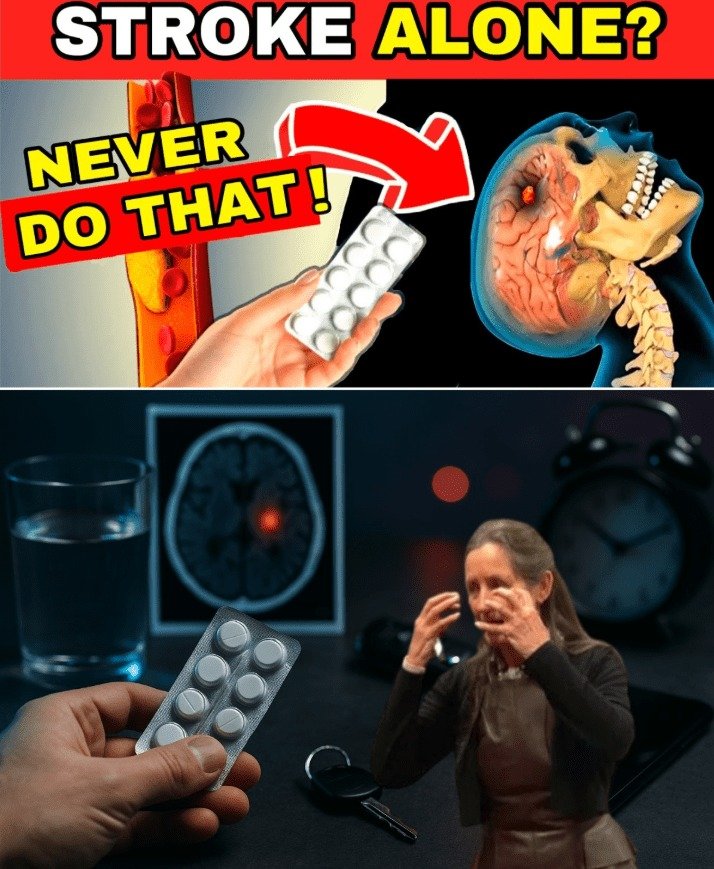
- Why this is deadly: While aspirin can be beneficial for ischemic strokes (caused by a clot), if the stroke is due to bleeding in the brain (hemorrhagic), taking aspirin can drastically worsen the condition and elevate the risk of a fatal brain hemorrhage.
- What to do instead: Absolutely do not attempt to self-medicate. Only a hospital diagnostic scan (like a CT or MRI) can accurately identify the type of stroke. Emergency medical professionals will then administer the appropriate treatment.
Mistake #3: Transporting Yourself or a Loved One by Car to the Hospital
During a crisis, many people mistakenly believe that driving to the hospital themselves will be faster than waiting for an ambulance to arrive.
- Why this is deadly: Ambulances are fully equipped with crucial life-saving medical devices and personnel who can provide immediate care while en route. They can also notify the hospital in advance, preparing the medical team for your arrival. Driving yourself wastes precious time and introduces the risk of dangerous complications on the road if the stroke symptoms intensify.
- What to do instead: Always call for an ambulance. Emergency medical teams are trained to provide rapid, specialized care during transport, ensuring quicker and more effective treatment upon reaching the hospital.
Quick Guide: Harmful Actions vs. Essential Responses
| Mistake | Why It’s Dangerous | Correct Action |
|---|---|---|
| Waiting for symptoms to go away | Delays treatment, worsens brain damage | Call emergency services immediately |
| Taking aspirin or meds at home | May worsen hemorrhagic stroke | Wait for hospital evaluation |
| Driving yourself | No immediate medical care en route | Use an ambulance for safe, rapid response |
Key Takeaway
Responding to a stroke is a critical race against the clock. The difference between achieving a full recovery and facing lifelong disability often hinges on what transpires within the first 60 minutes. Never delay seeking help, never make assumptions about medication, and never attempt to drive yourself—these three mistakes can have fatal consequences. The safest and most effective course of action is always to contact emergency services immediately and entrust the situation to medical professionals.
Frequently Asked Questions
What is considered the “golden hour” in stroke care?
This refers to the initial 60 minutes after stroke symptoms first appear. Receiving rapid medical treatment within this crucial timeframe significantly enhances the chances of recovery.
Is it possible for stroke symptoms to resolve on their own?
Yes, in the case of a “mini-stroke” (Transient Ischemic Attack or TIA). However, a TIA is still a medical emergency and serves as a critical warning sign that a more severe stroke could occur in the near future.
How can I reduce my personal risk of having a stroke?
You can lower your stroke risk by maintaining a balanced diet, engaging in regular physical activity, effectively managing your blood pressure, quitting smoking, and controlling any existing diabetes.
Disclaimer: This article is intended solely for educational purposes and should not be considered a substitute for professional medical advice. If you suspect someone is experiencing a stroke, contact emergency services without delay.