 By admin
 15 Critical Early Warning Signs of Nerve Damage (Neuropathy) You Can’t Afford to Ignore
Nerve damage, medically known as neuropathy, often begins insidiously, with symptoms so subtle they are frequently dismissed. Many individuals attribute these initial sensations to “just getting older,” everyday stress, poor circulation, or minor aches and pains. However, when peripheral nerves – those extending outside the brain and spinal cord, particularly in the hands, feet, legs, or arms – are compromised, overlooking these early indicators can lead to progressive damage. This damage may become irreversible or escalate into severe complications such as chronic pain, debilitating falls, or dangerous foot ulcers. This comprehensive guide outlines 15 of the most common and often-missed early to mid-stage signs of nerve damage. The more of these symptoms you experience, and the longer they persist, the more crucial it becomes to seek a prompt medical evaluation.
Sensory (Feeling-Related) Signs
Tingling or “Pins & Needles” Sensation
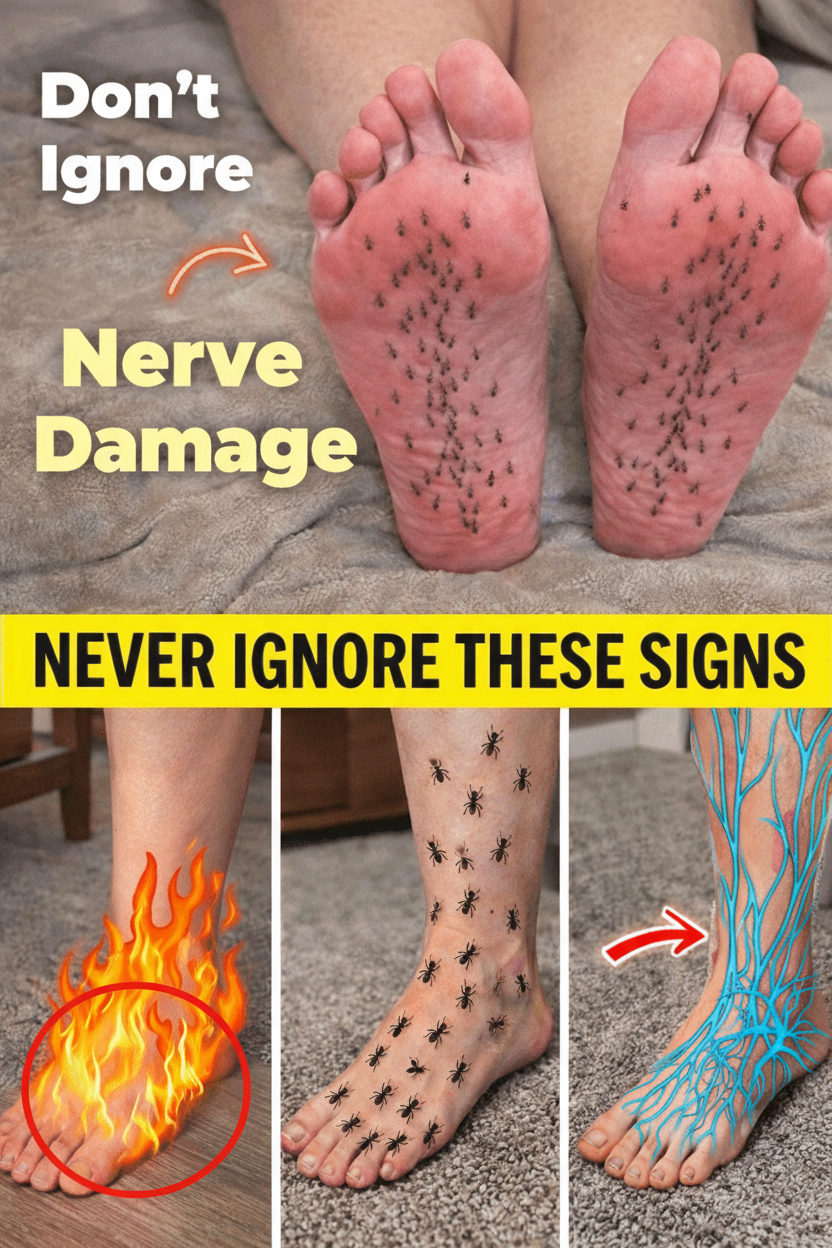
This common symptom, medically termed paresthesia, often manifests as a prickling, stinging, or “pins and needles” feeling, particularly in the feet, toes, hands, or fingers. It typically starts mild and may be intermittent.
- Why it’s Often Missed: Many people dismiss this as a temporary sensation from “sleeping on an arm/leg wrong” or prolonged sitting, rather than a potential sign of nerve distress.
Numbness or Reduced Sensation
You might experience a diminished ability to feel light touch, temperature, or pain in an affected area, akin to a limb “falling asleep.” This could mean struggling to feel the texture of your socks, the floor beneath your feet, or even a light brush.
- Why it’s Often Missed: Frequently attributed to being “just tired,” “poor circulation,” or simply “not paying attention.”
Burning, Electric, or Shooting Pain
This type of neuropathic pain can be described as sharp, intense electric-shock-like jolts, or a persistent, deep-seated burning sensation. It frequently intensifies at night or during periods of rest.
- Why it’s Often Missed: Often mistaken for a “muscle cramp,” general “nerve pain” (without understanding the underlying cause), or even arthritis.
Hypersensitivity (Allodynia)
Allodynia is a condition where normal, non-painful stimuli become painful or highly uncomfortable. Simple actions like wearing clothes, having bedsheets touch your skin, or a light touch can cause significant distress.
- Why it’s Often Missed: Individuals might attribute this to “sensitive skin,” a minor “irritation,” or even psychological factors.
Loss of Temperature Sensation
Difficulty discerning between hot and cold temperatures can be a dangerous sign. You might accidentally burn your hands on hot water or expose yourself to extreme cold without fully registering the temperature.
- Why it’s Often Missed: Often rationalized as being “clumsy,” “distracted,” or simply “not noticing.”
Motor (Movement-Related) Signs
Muscle Weakness or Heaviness
Nerve damage can manifest as a noticeable decrease in muscle strength. This might lead to difficulties with everyday tasks such as gripping objects firmly, opening jars, walking on your toes or heels, or ascending stairs.
- Why it’s Often Missed: Commonly dismissed as a natural consequence of “getting older” or being “out of shape,” rather than a neurological issue.
Frequent Dropping Things
If objects inexplicably slip from your hands without warning, it could be due to impaired grip strength or a reduced sense of touch (proprioception) in your fingers and hands.
- Why it’s Often Missed: Often chalked up to being generally “clumsy” or “distracted.”
Balance Problems or Unsteadiness
A feeling of wobbliness or instability, particularly noticeable in dimly lit environments or on uneven surfaces, often stems from compromised proprioception – the body’s ability to sense its position in space.
- Why it’s Often Missed: Frequently blamed on “just being tired,” needing “new glasses,” or simply a lack of coordination.
Autonomic (Body Regulation) Signs
Excessive Sweating or No Sweating
Dysfunction of the autonomic nerves can lead to paradoxical sweating patterns – either abnormally profuse sweating (e.g., constantly sweaty palms and feet) or a complete absence of sweating in areas that previously perspired normally.
- Why it’s Often Missed: Often attributed to “hot flashes,” hormonal changes, or simply “dry skin.”
Dizziness or Lightheadedness When Standing Up
This symptom, known as orthostatic hypotension, occurs when your blood pressure drops significantly upon changing positions, especially when moving from sitting or lying down to standing. It’s a key sign of autonomic neuropathy.
- Why it’s Often Missed: Frequently dismissed as “low blood pressure,” “dehydration,” or simply standing up too quickly.
Digestive Issues (Constipation, Bloating, Early Fullness)
Nerve damage affecting the digestive tract can slow gut motility, leading to persistent issues like chronic constipation, uncomfortable bloating, or feeling full after consuming only a small amount of food (early satiety).
- Why it’s Often Missed: Often self-diagnosed as “IBS” (Irritable Bowel Syndrome) or attributed solely to dietary choices.
Urinary Problems (Difficulty Starting/Stopping, Frequent UTIs)
Neuropathy can impair bladder control, manifesting as difficulty initiating or stopping urination, a weak stream, incomplete emptying, or an increased susceptibility to urinary tract infections (UTIs).
- Why it’s Often Missed: Often blamed on an “aging bladder,” or, in men, “prostate issues.”
Sexual Dysfunction
For men, this can involve erectile dysfunction. For women, it may present as reduced sensation or lubrication. Autonomic nerve damage can significantly impact sexual function in both genders.
- Why it’s Often Missed: This is often an embarrassing topic, frequently attributed to “stress,” “fatigue,” or simply “getting older.”
Dry Eyes or Mouth
A persistent reduction in tear and saliva production can be a sign of autonomic neuropathy or may indicate an overlap with autoimmune conditions like Sjögren’s syndrome.
- Why it’s Often Missed: Often blamed on “dry climate,” environmental “allergies,” or medication side effects.
Heart Rate or Blood Pressure Irregularities
Autonomic neuropathy can disrupt the body’s control over heart function, leading to a fast resting heart rate (tachycardia), an irregular pulse, or episodes of dizziness and lightheadedness when standing.
- Why it’s Often Missed: Frequently attributed to “anxiety,” “stress,” “dehydration,” or caffeine intake.
Quick Urgency Guide – When to See a Doctor
Promptly Emergency (ER or urgent care now)
- Sudden onset of severe weakness or paralysis in an arm, leg, or one side of the face.
- Acute, severe dizziness accompanied by fainting and an irregular heartbeat.
- Chest pain combined with shortness of breath and new numbness or tingling.
Urgent (within days)
- Rapidly worsening numbness, tingling, or muscle weakness.
- Persistent, intense burning or electric-shock-like pain alongside noticeable muscle loss.
- New or significantly worsened balance problems leading to frequent falls.
Prompt (within 1–2 weeks)
- Ongoing tingling or numbness, especially if you have a history of diabetes.
- Any combination of three or more neuropathy symptoms persisting for over four weeks.
- Unexplained weight loss and chronic fatigue accompanied by signs of neuropathy.
Routine check (within 1–3 months) if:
- Mild but persistent tingling or numbness in your feet or hands.
- A family history of neuropathy or autoimmune disease.
Bottom Line: Don’t Ignore the Whispers of Your Nerves
Nerve damage often begins with subtle, “silent” symptoms that individuals may overlook for months or even years, mistakenly attributing them to “normal aging,” poor circulation, or everyday stress. However, when multiple signs of neuropathy emerge concurrently – especially a combination of tingling, numbness, muscle weakness, and balance issues – they are never insignificant and warrant immediate medical evaluation.
Early diagnosis is paramount, as it allows for timely intervention when treatments are most effective. A thorough assessment may include a simple nerve conduction study (NCS), comprehensive blood tests (checking for deficiencies like B12, glucose levels, thyroid function, and inflammatory markers), and sometimes advanced imaging techniques. These diagnostic tools can pinpoint the problem early, enabling effective management through medication, physical therapy, and crucial lifestyle adjustments.
Remember, you are the expert on your own body. If even two to three of these early warning signs persist for more than three to four weeks – particularly if they affect your feet or hands – do not wait for the symptoms to worsen dramatically. Seek medical advice promptly.
Your Action Step:
Tonight, take a moment to assess your feet and hands. Do you notice any reduced sensation, persistent tingling, or unusual discomfort? Pay attention to your body’s signals.