 By admin
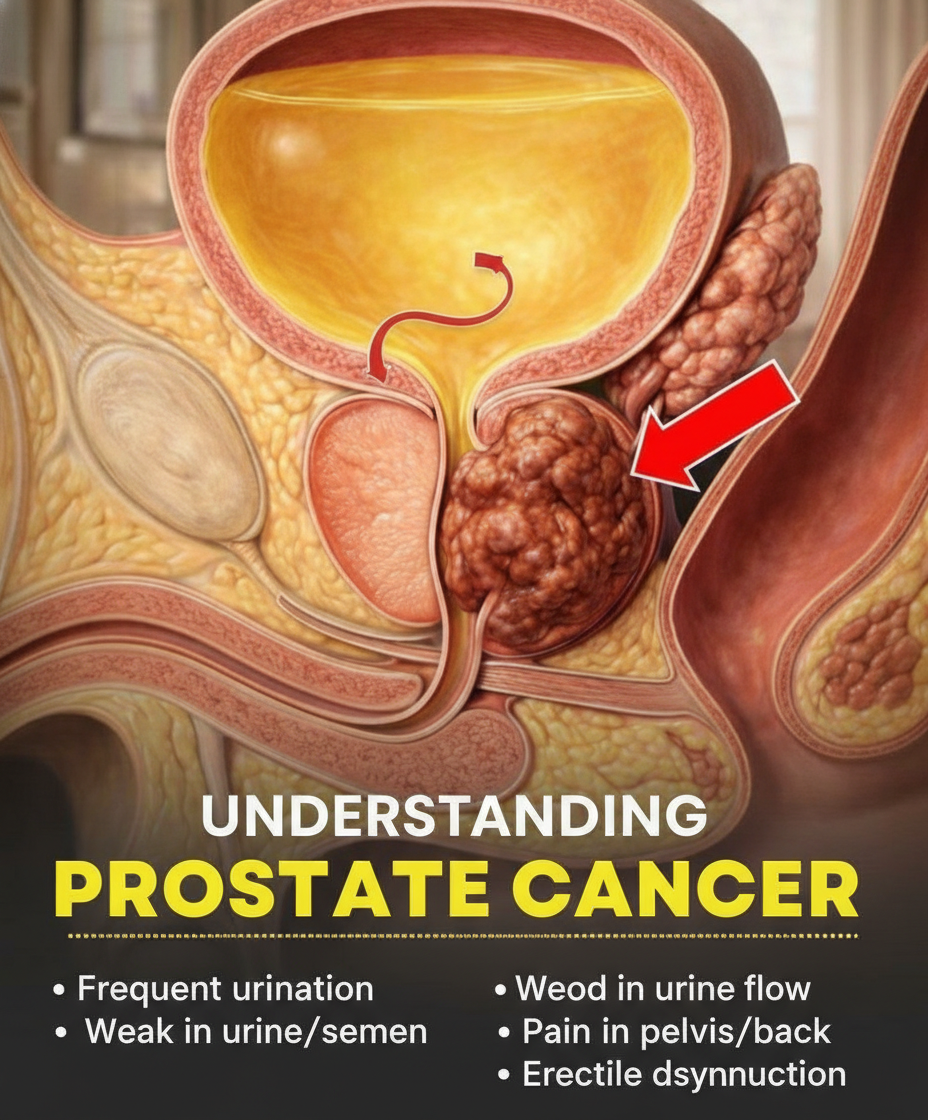
 Prostate cancer remains a prevalent health concern among men, particularly those over the age of 50. Initially, this form of cancer frequently presents without any noticeable symptoms, underscoring the critical importance of routine screening procedures like the Prostate-Specific Antigen (PSA) test and digital rectal exam (DRE). As the cancerous growth progresses or begins to metastasize, however, it can trigger discreet changes that many men mistakenly attribute to the natural aging process, a urinary tract infection, or even daily stress. Below, we detail 12 frequently overlooked early to mid-stage indicators, often reported by individuals who were subsequently diagnosed with prostate cancer. Recognizing multiple signs and their persistence should prompt a more urgent medical evaluation.
Early Urinary Changes (Often the First Clues)
Increased Urination Frequency, Especially Nocturnal (Nocturia)
- Observing a need to urinate multiple times (2-5 or more) during the night, even without significant fluid intake before sleep.
- Why Often Dismissed: Commonly attributed to the natural effects of an “aging prostate” or an assumption of excessive evening hydration.
A Weak, Slow, or Intermittent Urine Flow
- Experiencing a urinary stream that begins and stops intermittently, takes an extended time to initiate, or feels noticeably thin and lacking force.
- Why Often Dismissed: Frequently considered a typical aspect of “old-man pee” or a natural part of male aging.
Hesitancy or Straining to Initiate Urination
- A noticeable difficulty or delay in starting the urinary flow, often accompanied by a sensation of needing to push or exert effort.
- Why Often Dismissed: Sometimes incorrectly blamed on personal “laziness” or inadequate fluid intake (dehydration).
Sensation of Incomplete Bladder Emptying
- Experiencing post-urination dribbling, feeling the need to urinate again shortly after, or a persistent sensation that residual urine remains in the bladder.
- Why Often Dismissed: Frequently disregarded as mere “dribbling” or attributed to a weakened pelvic floor.
Pain & Discomfort Signs
Pain or Burning Sensation During Urination (Dysuria)
- Experiencing a mild to moderate stinging, burning, or general discomfort while passing urine.
- Why Often Dismissed: Commonly mistaken for a minor urinary tract infection (UTI), even in the absence of a fever, which is a typical UTI symptom.
Painful Ejaculation or Presence of Blood in Semen (Hematospermia)
- Reporting discomfort either during or immediately following orgasm, or noticing that semen has an unusual pink, red, or brownish tint.
- Why Often Dismissed: Often considered too embarrassing to discuss with a doctor, or mistakenly attributed to excessive sexual activity (“overdoing it”).
Persistent Ache in the Lower Back, Hips, Pelvis, or Upper Thighs
- A dull, constant, and unexplained ache in these areas, particularly one that worsens at night or when sitting/lying down for extended periods.
- Why Often Dismissed: Frequently misidentified as common “back strain,” arthritis, or sciatica, rather than a deeper issue.
General & Systemic Signs
Unexplained Weight Loss or Diminished Appetite
- Losing a significant amount of weight without intentional dieting or increased physical activity, often accompanied by a noticeable decrease in interest in food.
- Why Often Dismissed: Commonly rationalized as a consequence of “stress” or a perceived improvement in “diet.”
Persistent, Unrelenting Fatigue or Weakness
- Experiencing profound exhaustion or a lack of energy that persists despite adequate rest and sleep.
- Why Often Dismissed: Often attributed to the natural process of aging, work-related stress, or general poor sleep quality.
New or Worsening Erectile Dysfunction (ED)
- Difficulty achieving or maintaining an erection, particularly if this issue develops suddenly or gradually deteriorates over time.
- Why Often Dismissed: Often a source of embarrassment, leading men to assume it’s simply a “normal aging” process.
Visible Blood in Urine (Hematuria)
- Noticing urine that appears pink, red, or even cola-colored, even if this occurrence is infrequent or happens only once.
- Why Often Dismissed: A single instance is frequently brushed aside as a result of “something I ate” or a temporary anomaly.
Swelling in the Legs, Ankles, or Scrotum (Edema)
- Accumulation of fluid (edema) in these areas, which can occur if a tumor obstructs lymph nodes or veins.
- Why Often Dismissed: Commonly attributed to prolonged standing or excessive dietary salt intake.
When to Seek Medical Attention: An Urgency Guide
Understanding when to act on these symptoms is crucial. Here’s a guide to help you determine the appropriate timing for medical consultation:
Emergency Situation (Seek immediate medical care or visit the ER on the same day)
- Complete inability to urinate (acute urinary retention).
- Significant blood in urine accompanied by pain.
- Sudden onset of severe back or hip pain combined with leg weakness or numbness, potentially indicating spinal cord compression.
- Experiencing confusion, fever, or rapid, unexplained weight loss alongside urinary symptoms.
Urgent Consultation (Schedule an appointment with a urologist within a few days to one week)
- Ongoing difficulty initiating or completely emptying the bladder, coupled with a noticeably weak urinary stream.
- Any instance of blood appearing in urine or semen, even if it occurs only once.
- Discovery of a new lump in the prostate region (as detected during a medical examination) or swollen lymph nodes in the groin or neck area.
Prompt Evaluation (Consult a healthcare provider within 1–2 weeks)
- Waking up to urinate three or more times per night (nocturia) combined with any other concerning sign from the list above.
- Newly developed or worsening erectile dysfunction alongside other urinary changes.
- Chronic pelvic or back pain accompanied by persistent fatigue.
Routine Screening (Recommended even in the absence of symptoms)
- Men aged 50 and older (or 45 and older with a family history of prostate cancer or of African ancestry) should proactively discuss prostate-specific antigen (PSA) testing and a digital rectal exam (DRE) with their healthcare provider.
The Critical Takeaway
Prostate cancer often develops at a slow pace, making its initial indicators subtle and easily overlooked. However, when urinary alterations—such as increased frequency, a weakened stream, or the sensation of incomplete emptying—are present concurrently with pain, visible blood, unexplained weight loss, or persistent fatigue, these symptoms should never be dismissed as merely “old age.” If you experience even two or three of these warning signs for more than two to four weeks—particularly if they include difficulty urinating combined with blood or bone pain—it is imperative not to delay seeking medical advice in anticipation of more severe symptoms. A straightforward PSA blood test and digital rectal exam (DRE) are quick procedures that can detect prostate cancer at an early, highly treatable stage, where the 5-year survival rate for localized disease often exceeds 90%. Listen to your body and trust persistent changes; early detection can be life-saving.
Disclaimer: This article is intended solely for informational purposes and should not be considered a substitute for professional medical advice. While many of the symptoms described can stem from benign conditions (such as Benign Prostatic Hyperplasia (BPH), prostatitis, urinary tract infections (UTI), or kidney stones), the presence of persistent or multiple symptoms necessitates prompt evaluation by a qualified urologist. It is crucial never to self-diagnose or postpone seeking professional medical care based on the information provided here. If you observe blood in your urine or semen, or any other concerning symptom, consult a healthcare professional immediately.