 By admin
 12 Subtle Oral Cancer Symptoms You Should Never Overlook
Oral cancer, also known as mouth cancer or oropharyngeal cancer, stands out as a malignancy where early detection significantly boosts survival rates. Despite this critical fact, many individuals inadvertently overlook or rationalize its initial signs for extended periods, sometimes for months or even years. The early symptoms of oral cancer are frequently subtle, often painless in their nascent stages, and can easily be mistaken for common, benign issues such as canker sores, seasonal allergies, or even typical signs of aging.
The following list details 12 crucial symptoms that consistently emerge in medical literature and patient accounts as the most reliable early warning indicators. It’s particularly important to pay attention if several of these signs manifest concurrently, persist for more than 2-3 weeks, or progressively worsen over time.
1. Non-Healing Mouth Sores or Ulcers
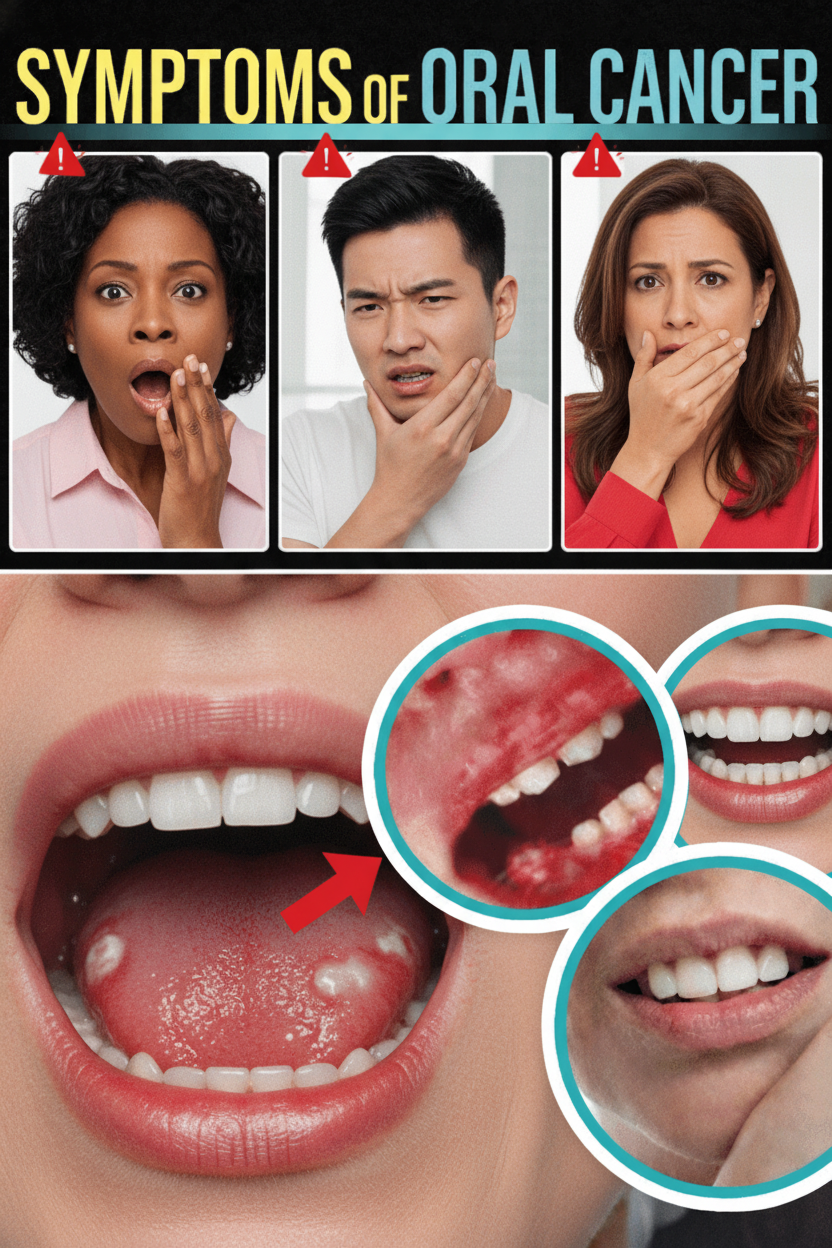
Any sore, ulcer, or discolored patch (red or white) located on the tongue, gums, inner cheek, floor, or roof of your mouth that persists for more than 2-3 weeks without showing signs of healing.
Why it’s often overlooked: Many individuals mistakenly attribute these to common canker sores, accidental bites, or minor irritation from food or dental hygiene tools.
2. Unexplained Lumps or Thickened Areas in the Mouth, Cheek, or Neck
A firm lump, an unusual area of thickening, or a swollen lymph node in your neck (especially if it’s only on one side) that does not resolve on its own.
Why it’s often overlooked: This is commonly dismissed as a “swollen gland” indicative of a cold, flu, or a general infection.
3. Persistent White or Red Patches Inside the Mouth (Leukoplakia or Erythroplakia)
A flat or slightly raised white patch (known as leukoplakia) or a bright red, velvety patch (erythroplakia) within your mouth that cannot be easily scraped away.
Why it’s often overlooked: These patches are frequently mistaken for irritation caused by spicy foods, ill-fitting dentures, or habitual cheek biting.
4. Chronic Sore Throat or Sensation of Something Stuck in the Throat
A sore throat that endures for weeks or even months, or a constant feeling of a lump or foreign object lodged in the throat (medically termed globus sensation).
Why it’s often overlooked: These symptoms are frequently blamed on allergies, post-nasal drip, or acid reflux disease.
5. Hoarseness or Voice Changes Lasting Over 2-3 Weeks
A raspy, weak, or breathy voice quality that does not improve with vocal rest.
Why it’s often overlooked: Many people attribute changes in their voice to shouting, a common cold, or simply the natural process of aging.
6. Persistent Pain or Burning Sensation in the Mouth or Tongue
A continuous or intermittent burning, tingling, or painful sensation, particularly if it’s localized to one side of the mouth or tongue.
Why it’s often overlooked: This discomfort is often dismissed as “sensitive teeth,” a reaction to spicy food, or a benign nerve issue.
7. Difficulty or Pain While Chewing, Swallowing, or Moving the Jaw/Tongue
Experiencing food feeling like it “sticks,” pain during chewing, a jaw that locks or clicks, or restricted movement of the tongue.
Why it’s often overlooked: These issues are commonly linked to temporomandibular joint (TMJ) disorders, other dental problems, or dry mouth.
8. Unexplained Loose Teeth or Dentures That No Longer Fit Properly
Teeth becoming loose without any apparent gum disease or injury, or dentures suddenly feeling uncomfortable or ill-fitting.
Why it’s often overlooked: This is often attributed to “aging gums” or the normal need for new dentures.
9. Unexplained Numbness in the Mouth, Lip, or Chin
A sensation of numbness or tingling, especially on one side of the mouth, lower lip, or chin, without a clear cause.
Why it’s often overlooked: Individuals might assume this is due to sleeping in an awkward position or a recent dental procedure.
10. Ear Pain on One Side (Without Hearing Loss or Ear Infection)
A persistent earache or a feeling of fullness in one ear, particularly when no ear problem or infection can be diagnosed.
Why it’s often overlooked: This is frequently referred pain from the throat or tongue, often misdiagnosed as a primary ear infection.
11. Unexplained Weight Loss or Loss of Appetite
Losing weight without intentionally trying, often accompanied by a reduced appetite or discomfort while eating.
Why it’s often overlooked: These symptoms are commonly attributed to “stress” or the natural process of “getting older.”
12. Chronic Bad Breath or Foul Taste That Doesn’t Improve with Brushing
A persistent unpleasant odor or a metallic/bitter taste in the mouth, even with diligent oral hygiene practices.
Why it’s often overlooked: This is often blamed on dietary choices, stomach issues, or simply categorized as “normal” bad breath.
When to Seek Professional Medical Advice: An Urgency Guide
Understanding when to consult a healthcare professional is paramount for early diagnosis of potential oral cancer.
- Immediate Consultation (Within Days – See an ENT, Oral Surgeon, or Dentist):
- Any persistent sore, ulcer, or discolored (white or red) patch that lasts longer than 2-3 weeks.
- A noticeable lump in your mouth or neck accompanied by hoarseness or difficulty swallowing.
- Unexplained, persistent ear pain on one side, especially when combined with other oral symptoms.
- Loose teeth without an apparent dental cause, or a sudden change in how your dentures fit.
- Emergency Room Visit (Same Day):
- Rapid swelling in the neck or jaw area that severely impacts breathing or swallowing.
- Significant or heavy bleeding from the mouth.
- Intense pain coupled with a fever, indicating a possible severe infection or complication.
- Routine Check-up (Within 1-2 Weeks):
- Any new or unusual change in your mouth that persists beyond two weeks, particularly if you have risk factors such as smoking, heavy alcohol consumption, a history of HPV, or a family history of head and neck cancer.
The Bottom Line: Prioritize Early Detection
The prognosis for oral cancer is remarkably favorable when detected in its early, localized stages, boasting 5-year survival rates exceeding 80-90%. Conversely, if the cancer is diagnosed at a later, more advanced stage, these survival rates can plummet to below 40%. The 12 symptoms outlined above represent the most consistently reported early warning signs by patients who were subsequently diagnosed with oral cancer. It’s crucial to remember that these signs rarely manifest dramatically or all at once.
If you observe even two or three of these symptoms persisting for more than 2-3 weeks—especially a non-healing sore or ulcer combined with a lump or hoarseness—do not delay seeking medical attention in anticipation of pain or bleeding. A straightforward oral examination by a dentist or an Ear, Nose, and Throat (ENT) specialist, potentially followed by a biopsy, can identify cancerous changes at their very earliest stage. You are the most familiar with your own body. Any persistent change in your mouth that simply “doesn’t feel right” warrants a prompt professional evaluation—it only takes a few moments to potentially save your life.