 By admin
 Introduction: Recognizing the Early Indicators of Breast Cancer
Breast cancer continues to be one of the most frequently diagnosed cancers among women across the globe. Although maintaining vigilance is paramount, many women lack awareness regarding its initial warning signs. While regular screenings, such as mammograms and consistent self-examinations, are indispensable for early detection, a clear understanding of potential symptoms empowers you to act promptly. Indeed, identifying these signs early can significantly enhance treatment effectiveness and improve long-term prognosis. In the following sections, we will meticulously detail 11 crucial warning signs of breast cancer that every woman should be acutely aware of. By internalizing this vital information, you can proactively manage your health and promptly seek medical consultation if any concerns emerge.
1. A New or Unusual Lump in the Breast or Armpit
Perhaps the most widely recognized early indicator of breast cancer is the discovery of a new mass or lump within the breast tissue or in the underarm region. It is critical to remember that not every lump signifies cancer; however, any new or suspicious lump absolutely warrants immediate medical evaluation.
Why This Happens: Malignant lumps typically present as firm, unyielding, and irregularly shaped masses that often feel anchored to the surrounding tissues, resisting movement when touched. In contrast, benign lumps, such as cysts or fibroadenomas, tend to be smoother and more mobile.
What to Do: Should you detect a persistent lump that doesn’t resolve or appears to increase in size, it is imperative to arrange a consultation with your healthcare provider without delay. Diagnostic tools like a mammogram or ultrasound will likely be employed to thoroughly assess the nature of the lump.
2. Alterations in Breast Shape or Size
Subtle yet noticeable shifts in the contour or volume of your breasts can sometimes point to breast cancer, particularly if one breast exhibits increased size, swelling, or a marked asymmetry compared to its counterpart.
Why This Happens: Tumor development within the breast can physically distort its tissues, leading to these observable changes. Such growth might cause the breast to appear misshapen, uneven, or even feel unusually firm to the touch.
What to Do: It is crucial not to disregard any observed changes in your breast’s shape or size. Promptly seek an assessment from a qualified healthcare professional, who can determine the necessity of further diagnostic tests.
3. Persistent or Unexplained Breast Pain
While breast pain is often benign and frequently associated with menstrual cycles or hormonal shifts, persistent or atypical discomfort that does not subside warrants attention. Though less common than a lump, it can occasionally signal breast cancer.
Why This Happens: Malignant tumors, as they grow, can exert pressure on adjacent breast tissues and nerves, resulting in localized pain, tenderness, or a general sense of unease. Unlike cyclical pain, cancer-related breast pain may feel constant and unrelated to hormonal changes.
What to Do: Should you experience breast pain that is ongoing, unusual in nature, or concentrated in a specific area, schedule a consultation with your physician for a comprehensive diagnostic evaluation.
4. Visible Skin Changes on the Breast
Breast cancer can manifest through various alterations in the skin covering the breast. These may include noticeable redness, dimpling, or a textured appearance akin to an orange peel (known as “peau d’orange”), or even an unexplained rash.
Why This Happens: Cancer cells can impede the normal function of lymphatic vessels within the breast’s skin. This obstruction leads to fluid buildup and inflammation, causing the characteristic dimpled, pitted “peau d’orange” texture. Such significant skin changes are often associated with more advanced forms of breast cancer, including inflammatory breast cancer.
What to Do: Any unusual changes to your breast skin, such as persistent redness, a new rash, or pronounced dimpling, necessitate immediate medical attention for thorough assessment and diagnosis.
5. Nipple Alterations
Changes affecting the nipple can be an important warning sign. These may include a new inversion (the nipple turning inward), unexplained discharge, or scaling of the skin around the nipple. Of particular concern is any bloody discharge or fluid that appears spontaneously and is unrelated to pregnancy or breastfeeding.
Why This Happens: The presence of a tumor beneath the nipple can cause structural changes, leading to its retraction or inversion. Tumors can also irritate ducts, resulting in fluid discharge, which might vary in color from clear or yellowish to blood-tinged.
What to Do: Should you observe any significant nipple changes, such as new inversion, unexplained discharge, or skin abnormalities, promptly reach out to your healthcare provider for a comprehensive evaluation.
6. Swelling or Lumps in the Armpit Region
The appearance of swelling or a noticeable lump in the armpit (axillary) area can be a significant indicator of breast cancer. This is because breast cancer cells frequently spread to the adjacent lymph nodes, causing them to become enlarged.
Why This Happens: The lymph nodes situated in the armpit serve as a primary drainage route for the breast. When cancer cells metastasize from the breast, they often travel to and accumulate in these lymph nodes, resulting in their palpable swelling or the formation of a distinct lump.
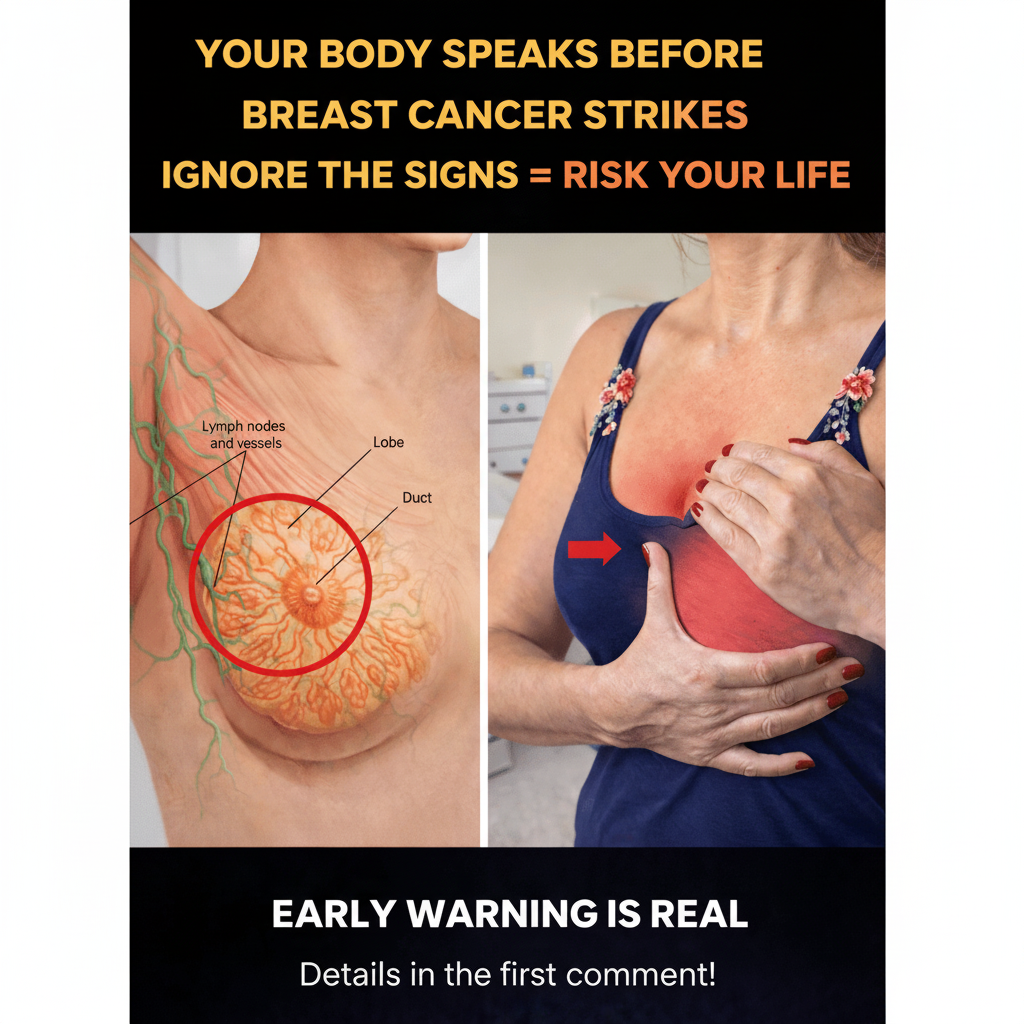
What to Do: Discovering any new swelling or a persistent lump in your armpit should prompt an immediate visit to your physician for thorough investigation. While it could be an infection, it is crucial to rule out the possibility of breast cancer.
7. Persistent Redness or Warmth on the Breast
Unexplained redness and a sensation of warmth on the breast, especially if localized to a specific area, warrant careful attention. While these symptoms can signal an infection (like mastitis) or general inflammation, they are also classic indicators of inflammatory breast cancer (IBC), a less common but aggressive form of the disease.
Why This Happens: Inflammatory breast cancer is characterized by cancer cells blocking the lymphatic vessels within the breast skin. This blockage leads to a buildup of fluid and inflammation, causing the breast to appear red, feel warm, and often become swollen and tender.
What to Do: If you observe unusual or persistent redness and warmth on your breast, particularly if accompanied by other symptoms like swelling or skin changes, it is vital to seek urgent medical evaluation. Early diagnosis of IBC is crucial for effective treatment.
8. Persistent Itching or Irritation of the Breast/Nipple
While often benign, persistent and unexplained itching or irritation on the breast or nipple area, especially if it doesn’t respond to typical remedies, can occasionally be a subtle warning sign of breast cancer.
Why This Happens: In some cases, cancerous cells can cause inflammation or changes in the skin’s surface, leading to localized itching or an irritating sensation. This symptom is sometimes associated with Paget’s disease of the breast, a rare form of cancer affecting the nipple and areola.
What to Do: If you experience chronic or unusual itching or irritation that persists on your breast or nipple, and it’s not attributable to a known cause or doesn’t resolve, consult your doctor for an examination.
9. New Area of Thickening or Hardness in the Breast
Beyond distinct lumps, a new area of thickening or firmness within the breast tissue that feels different from the surrounding area can also be a significant warning sign. This might feel like a ridge or a subtle hardening rather than a defined mass.
Why This Happens: Cancerous cells can infiltrate and harden breast tissue without forming a clearly defined lump. This diffuse infiltration can alter the texture and density of a specific region of the breast, making it feel thicker or firmer than usual.
What to Do: Any new or persistent area of thickening or hardness that you notice during self-examination or incidentally should be promptly evaluated by a healthcare professional. This often requires imaging such as a mammogram or ultrasound.
10. Prominent or Enlarged Veins on the Breast Surface
While less common, the sudden appearance of visibly prominent or enlarged veins on the surface of one breast can sometimes be a sign of underlying breast cancer. This is particularly concerning if it’s asymmetrical and appears on only one breast.
Why This Happens: A rapidly growing tumor requires an increased blood supply. To meet this demand, the body may create new blood vessels or enlarge existing ones near the surface of the breast, making them more noticeable.
What to Do: If you observe new, unusually prominent veins on one breast, especially without a clear explanation like significant weight loss or pregnancy, seek medical advice for further investigation.
11. Persistent Swelling of the Entire Breast
Beyond localized swelling or a specific lump, a general, persistent swelling of an entire breast that doesn’t subside can be a critical warning sign. This might make the breast feel heavier, fuller, or noticeably larger than the other.
Why This Happens: Diffuse swelling across the breast can be indicative of inflammatory breast cancer or a widespread tumor affecting the lymphatic drainage system. This leads to generalized fluid retention and enlargement of the breast.
What to Do: Any unexplained and persistent swelling affecting an entire breast requires urgent medical evaluation. This symptom, particularly when accompanied by redness or warmth, should be investigated without delay.
Conclusion: Empowering Yourself Through Knowledge
Understanding these 11 crucial warning signs of breast cancer is a powerful step toward proactive health management. While observing one or more of these symptoms doesn’t automatically mean you have cancer, it unequivocally means you should seek prompt medical advice. Early detection is the cornerstone of successful breast cancer treatment and significantly improves prognosis.
Regular self-examinations, routine clinical breast exams, and recommended mammograms, combined with an awareness of your body and these specific signs, form a comprehensive strategy for safeguarding your breast health. Don’t hesitate to discuss any concerns with your healthcare provider; your vigilance could be life-saving.