 By admin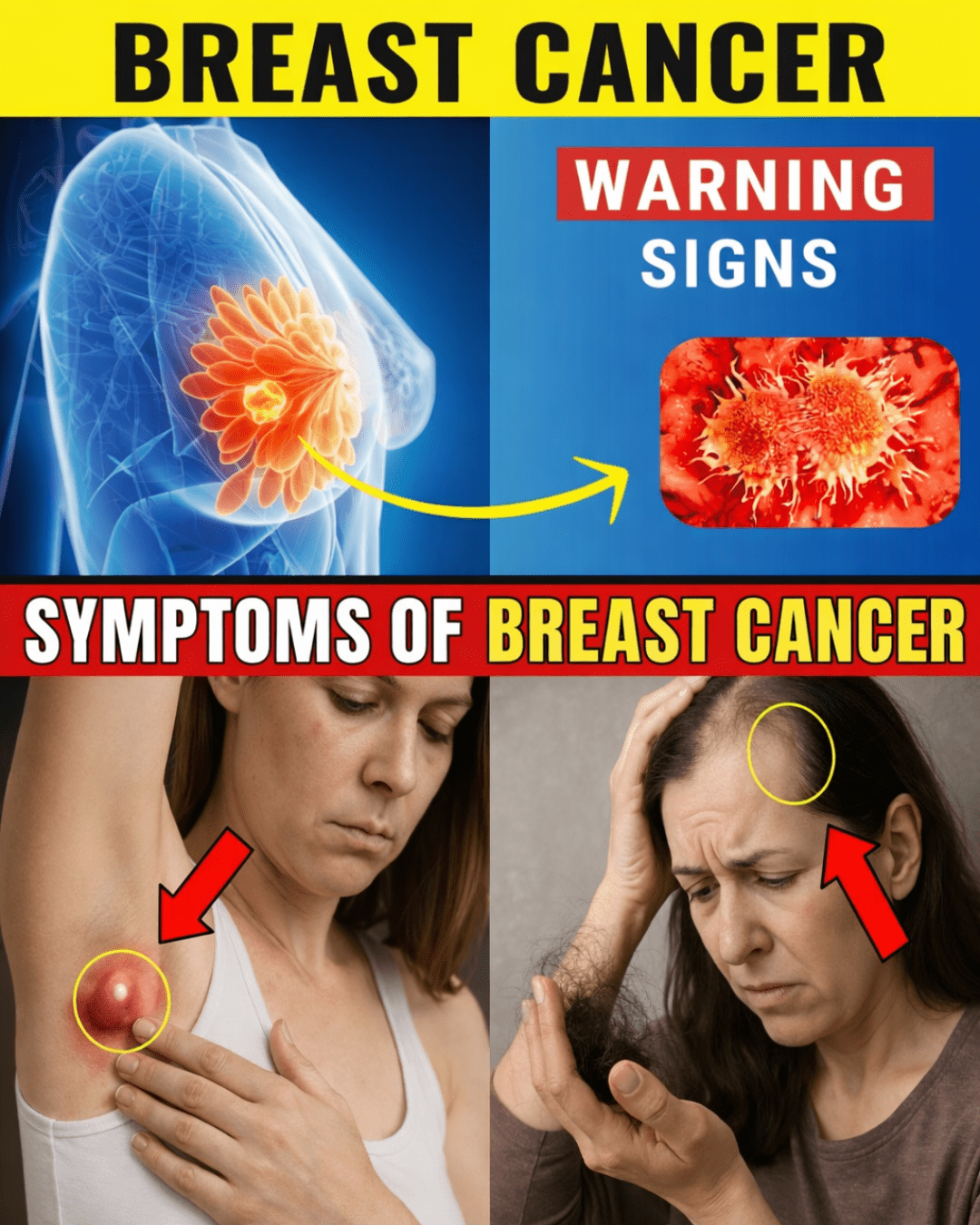
You’ve noticed a small change in your breast, maybe a slight asymmetry or a bit of redness, and it’s easy to dismiss it as nothing serious. Many women do the same, hoping it will go away on its own, only to regret the delay later when things become more complicated. The truth is, breast cancer often starts with subtle signs that can be overlooked, but catching them early makes all the difference in outcomes.
Here’s the good news: You’re about to learn the 10 most important warning signs that every woman—and yes, even men—should know. But one of them is considered the most urgent indicator of potential spread… keep reading to find out which.

Why Early Detection Matters More Than Ever
Breast cancer is one of the most common cancers among women, with an estimated 316,950 new cases expected in the United States in 2025, according to projections from the American Cancer Society. That’s roughly 1 in 8 women facing it over their lifetime.
But here’s what changes everything: When detected early, while still localized, the 5-year relative survival rate is nearly 99%. If it spreads distantly, that drops significantly.
Research shows that many delays happen because symptoms are brushed off for weeks or months. The key window for the best outcomes is acting quickly on any unusual changes.
Knowledge empowers you. Let’s dive into the signs, starting with the more subtle ones.
10. Unexplained Changes in Breast Size or Shape
One breast suddenly appears larger or differently shaped, without any clear reason like weight gain or hormonal shifts.
This can happen as a tumor grows and affects the breast tissue. According to Mayo Clinic experts, asymmetry that’s persistent and one-sided warrants attention.
Here’s a quick comparison:
| Characteristic | Normal Variation | Potential Red Flag |
|---|---|---|
| Affects both breasts? | Yes (e.g., menstrual cycle) | No, usually one side only |
| Duration | Temporary | Lasts more than 2 weeks |
| Accompanied by… | Nothing unusual | Firmness or other changes |
Pro tip: Take monthly photos in the same pose and lighting to track subtle shifts over time.
But that’s not the only skin-related clue…

9. Skin Dimpling or Texture Changes
Your breast skin starts to look like the peel of an orange—puckered or dimpled.
This “peau d’orange” appearance occurs when cancer pulls on the skin or blocks lymph vessels. Studies from Johns Hopkins indicate it’s an early presenter in some cases.
Self-check tips:
- Stand with arms at sides, then raise them overhead—look for uneven pulling.
- Hands on hips to tense muscles—watch for asymmetry.
Any new dimpling? Don’t wait—schedule a checkup.
The next sign can be misleading at first…
8. Persistent Itching, Redness, or Irritation
An itch that lingers for weeks, often with redness or warmth, especially if it affects a large area.
This is a hallmark of inflammatory breast cancer (IBC), a rare but aggressive type making up 1-5% of cases. The American Cancer Society notes IBC often mimics an infection, leading to delays.
Key differences:
| Symptom | Common Irritation | Possible IBC |
|---|---|---|
| Duration | A few days | Weeks or more |
| Spread | Localized | Covers much of the breast |
| Other signs | None | Swelling, warmth |
If antibiotics don’t help within a week, seek specialist evaluation urgently.
Sometimes, the sign feels more internal…

7. Hard Lumps or Thickened Areas
A firm, irregular mass that feels like a marble—unlike soft, movable cysts.
The American Cancer Society reports most palpable cancers are hard and fixed. Benign lumps are often smooth and mobile.
Comparison table:
| Feature | Benign (e.g., Cyst) | Malignant |
|---|---|---|
| Shape | Round, smooth | Irregular |
| Mobility | Moves easily | Fixed to tissue |
| Pain | Often tender | Usually painless |
Men, take note: This is the most common sign in male breast cancer too, which affects about 2,800 men annually.
6. Persistent Breast or Nipple Pain
A constant ache in one area, not tied to your cycle.
While breast pain is common and usually benign, ongoing localized pain can signal trouble, especially with other changes.
Research indicates it’s more concerning when one-sided and progressive.
5. Unexplained Swelling
The breast or armpit swells without a visible lump.
This can stem from lymph blockage, common in aggressive forms. Checking armpit nodes regularly is crucial:
- Raise one arm.
- Use opposite hand to feel in circles.
Any firm, enlarged nodes? Note them.
4. Nipple Retraction or Inversion
A nipple that suddenly turns inward, if it wasn’t before.
Often linked to tumors pulling from behind. Recent onset in one nipple is a red flag.

3. Red, Flaky, or Thickened Skin on Nipple/Areola
Skin that looks eczematous—red, scaly, crusty—with itching or burning.
This could indicate Paget’s disease of the nipple, a rare form often tied to underlying cancer. Mayo Clinic describes it as starting like a rash but persisting.
2. Unusual Nipple Discharge
Clear, bloody, or spontaneous fluid from one nipple.
Bloody discharge has higher concern, per guidelines—always get it checked promptly.
And now, the sign many experts watch closely for spread…
1. Swollen Lymph Nodes in Armpit or Collarbone
Enlarged, firm nodes under the arm or above the collarbone.
This suggests possible spread. The American Cancer Society emphasizes: Any breast change plus node swelling needs immediate attention.
Survival impacts by stage:
| Stage | Typical Node Involvement | 5-Year Survival |
|---|---|---|
| Early (Localized) | None | Near 99% |
| Regional (Nodes) | Yes | 85-90% |
| Distant | Spread beyond | Lower |

Your Simple Monthly Breast Self-Exam Routine
Make it a habit—takes just minutes:
- In the shower: Feel for lumps with flat fingers in circles.
- In front of mirror: Look for visual changes in different poses.
- Lying down: Repeat feel check—best for detecting deeper areas.
Do this monthly, ideally a few days after your period.
High-risk factors? Family history, age 40+, dense breasts—discuss screening with your doctor.
Real Stories of Early Action
Women like Emily noticed dimpling early—stage 0, simple treatment, full recovery.
Delays can change that, but early wins are common with awareness.
When to Seek Immediate Care
Go to ER or doctor same-day if:
- Bloody discharge with lump
- Rapid redness/swelling
- Fixed lump with nodes
- Any changes in men
FAQ
At what age should I start mammograms?
The American Cancer Society recommends women at average risk start annual mammograms at age 40-44 (optionally), then yearly from 45-54, and every 1-2 years after.
Can men really get breast cancer?
Yes, though rare—about 2,800 cases yearly. Symptoms are similar; early detection is key.
Is a lump always cancer?
No, most aren’t—but any new, persistent lump needs evaluation to rule it out.
This article is for educational purposes only and is not a substitute for professional medical advice. If you notice any concerning changes, consult your healthcare provider promptly. Regular screenings and self-awareness are vital for early detection.
(Word count: approximately 1,350)