 By admin
 10 Subtle Lung Cancer Symptoms Many People Tend to Overlook
Lung cancer stands as a formidable global health challenge, frequently claiming lives because it often progresses silently in its initial stages. Many individuals might notice minor bodily shifts but mistakenly attribute them to common factors like stress, the natural aging process, or trivial ailments, inadvertently allowing the condition to advance undetected. The encouraging news is that recognizing these understated signals early can prompt timely discussions with a healthcare professional, a step that research consistently shows can dramatically improve patient outcomes. What if some of those everyday discomforts you’ve been dismissing are actually worth closer scrutiny? Continue reading to uncover 10 prevalent yet frequently ignored indicators, and learn straightforward approaches to proactively manage your lung health.
Why Early Awareness Matters for Lung Health
According to the World Health Organization (WHO), lung cancer accounts for more annual fatalities than breast, colon, and prostate cancers combined. Studies further reveal that over 70% of cases are diagnosed in advanced stages, at which point treatment options become significantly more restricted. Prompt recognition of unusual physical changes can trigger a crucial medical evaluation. Research published in prestigious journals such as The Lancet indicates that when lung issues are identified while localized, five-year survival rates can reach an impressive 60%—a stark contrast to the considerably lower rates observed in advanced-stage diagnoses. The primary obstacle? Many early symptoms are mild and easily brushed aside. Let’s delve into each one so you can better understand what your body might be trying to communicate.
Sign 1: Persistent Fatigue That Doesn’t Improve With Rest
Experiencing unusual tiredness day after day, even following adequate sleep, is a common complaint among adults. However, when this fatigue becomes profound, relentless, and debilitating, it can occasionally signal underlying health alterations. Cancer cells can disrupt the body’s energy utilization and oxygen levels, leading to this pervasive exhaustion. If you’ve been feeling inexplicably drained for several weeks without a clear explanation, it warrants attention. This represents one of the most common early cues that individuals often attribute to demanding schedules or the natural course of aging.
Sign 2: Swelling in the Face or Neck
Noticeable puffiness or fluid retention around the face, neck, or upper chest—particularly if it intensifies in the morning—can be a cause for concern. Some individuals might misinterpret it as allergies or general fluid retention. In specific instances, a growth situated in the upper lung region can exert pressure on major blood vessels, causing blood to accumulate. This condition is medically termed superior vena cava syndrome and necessitates immediate medical assessment. Observe whether the swelling is intermittent or if it persists over time.
Sign 3: Frequent Respiratory Infections That Linger
Contracting bronchitis or pneumonia more frequently than usual, or finding that chest infections take an extended period to resolve, can be incredibly frustrating. While antibiotics might offer temporary relief, the recurring pattern could indicate a deeper issue. An obstruction within the airways can impede the lungs’ ability to effectively clear bacteria and mucus, leading to recurrent problems. This is another subtle indicator that many people tend to disregard. Diligently tracking the frequency of these infections can provide invaluable information for your physician.
Sign 4: Changes in the Eyes or Eyelids
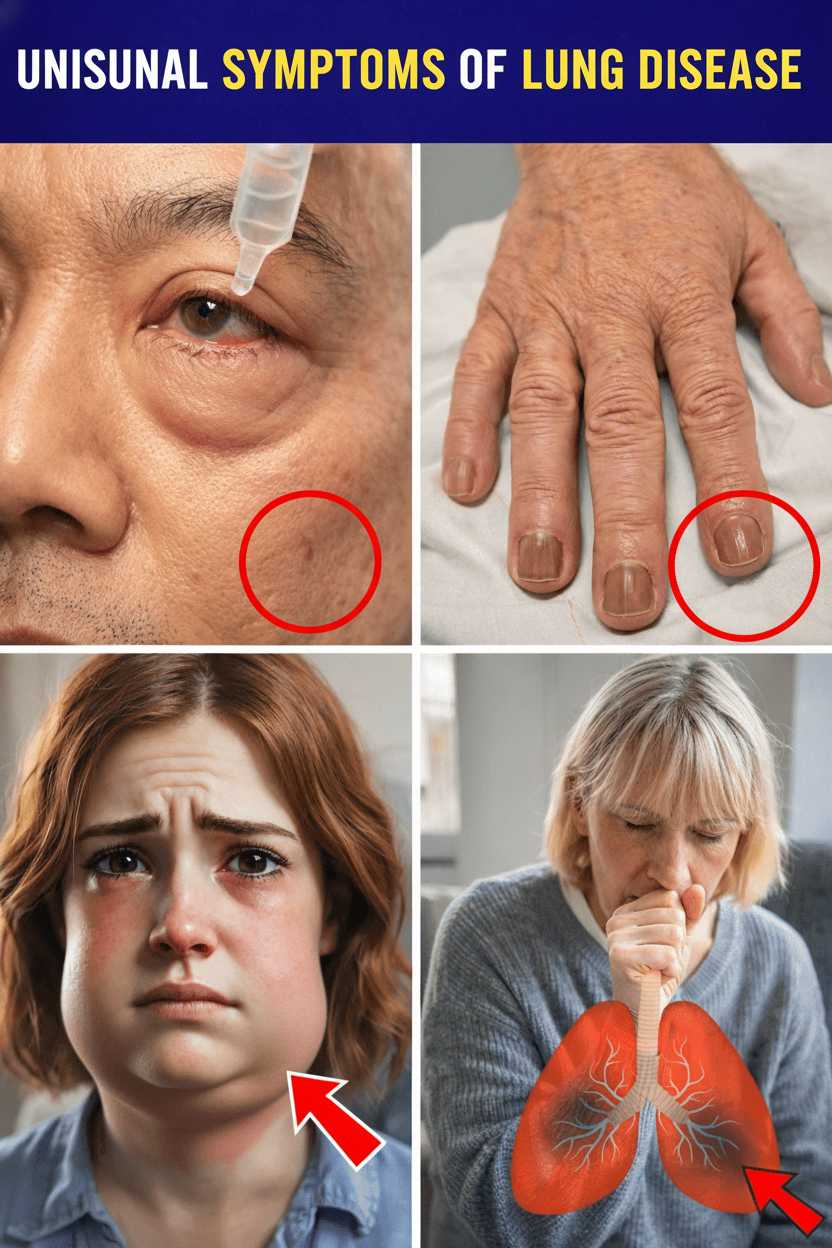
A drooping eyelid (ptosis), a smaller pupil on one side (miosis), or reduced sweating on a specific part of the face (anhidrosis) might initially seem insignificant. These collective changes are characteristic of what’s known as Horner syndrome. Tumors located at the very top of the lung, specifically called Pancoast tumors, can impact nearby nerves, resulting in these discernible yet often understated asymmetries. If you observe facial asymmetry developing gradually, consider discussing it during your next medical check-up.
Sign 5: Difficulty Swallowing Food or Liquids
The sensation of food getting stuck in your throat or experiencing pain during swallowing (dysphagia) can significantly disrupt mealtimes. Many individuals adapt by consuming softer foods and delay seeking further evaluation. Growths positioned near the esophagus can exert pressure, making swallowing progressively more challenging over time. Pay close attention if this discomfort persists beyond a temporary sore throat.
But that’s not all—there are more signs worth knowing about…
Sign 6: Ongoing Hoarseness or Voice Changes
A persistently raspy, weak, or breathy voice that lasts for several weeks can impact communication and self-confidence. While singers and teachers often detect this change first, anyone can experience it. Tumors can impinge upon nerves that control the vocal cords, leading to prolonged hoarseness. If common over-the-counter remedies fail to alleviate the symptoms after a few weeks, it is prudent to have it medically examined.
Sign 7: Changes in Fingernail Shape (Clubbing)
Fingernails that become distinctly curved, broadened, or bulbous at the tips—a condition referred to as clubbing—can evolve gradually. It frequently begins subtly and goes unnoticed by many. Chronically low oxygen levels in the bloodstream can, over time, trigger alterations in the nail beds and the overall shape of the fingertips.