 By admin
 10 Critical Cancer Warning Signs You Must Not Overlook
Cancer often begins subtly, its early warning signs easily mistaken for common ailments like stress, fatigue, or the natural process of aging. These initial indicators can be vague, making them simple to dismiss as “nothing serious.” However, by the time more pronounced or alarming symptoms manifest, the disease may have progressed to a stage that is significantly more challenging to treat.
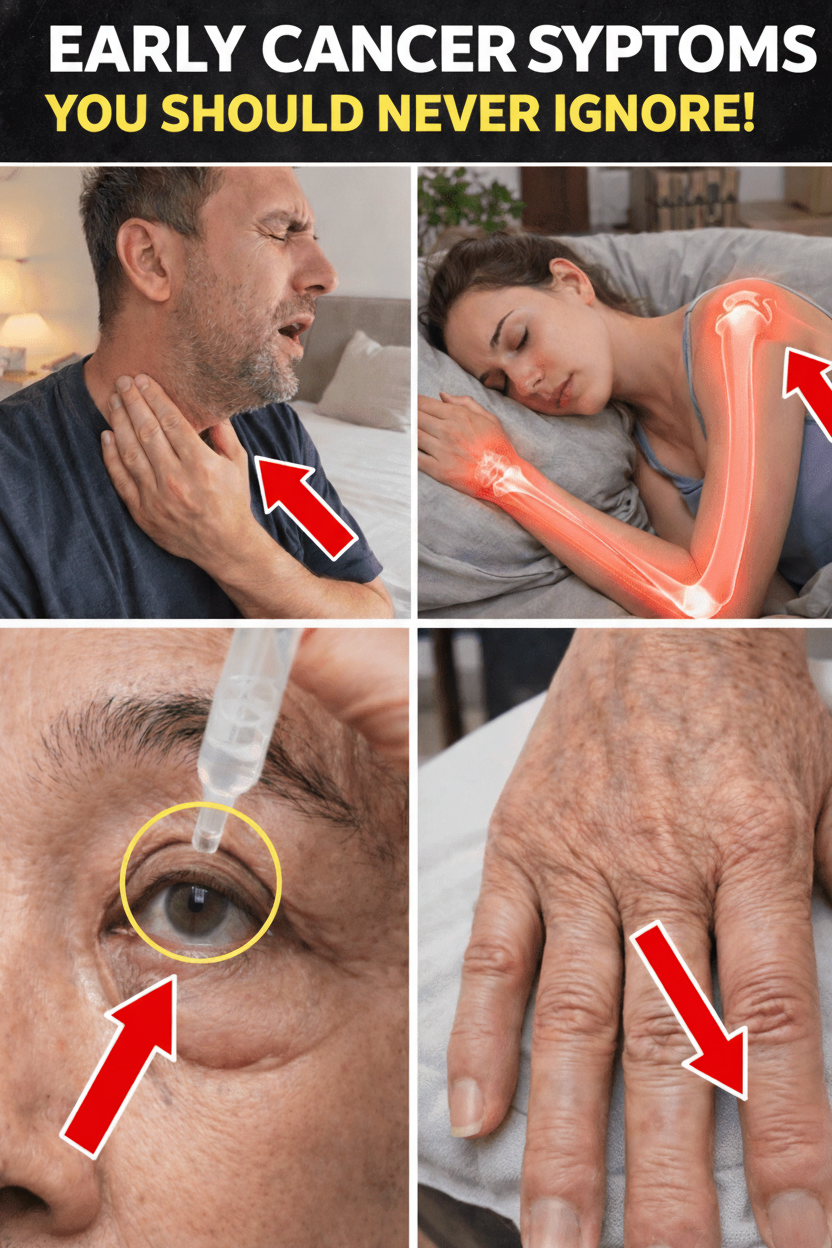
Below, we present 10 of the most consistently reported and frequently overlooked early-to-mid-stage signs, compiled from major health guidelines by reputable organizations such as the American Cancer Society, the World Health Organization, and the Mayo Clinic, as well as extensive patient registries. If you experience several of these symptoms—especially if they persist for more than 2–4 weeks, gradually worsen, or appear in combination—it is crucial to seek medical advice promptly.
1. Unexplained Weight Loss (A drop of 5–10% or more of body weight over 6–12 months without intentional effort)
Significant, unintentional weight loss is a common early red flag across a spectrum of cancers, including those affecting the pancreas, stomach, lungs, esophagus, colon, and blood (lymphoma, leukemia). People often overlook this symptom, attributing it to “finally eating healthier,” “being more active,” or “work-related stress.”
2. Persistent Fatigue or Weakness That Doesn’t Improve With Rest
This isn’t typical exhaustion; it’s an extreme, debilitating tiredness that persists even after adequate sleep (8–10 hours). Many dismiss this profound fatigue as “just getting older,” a consequence of a “busy lifestyle,” or “poor sleep quality.”
3. New or Changing Lumps / Thickened Areas Anywhere on the Body
Any new lump, swelling, or area of thickened tissue, particularly in regions like the breast, testicle, neck, armpit, groin, or under the jaw, that does not resolve within 2–3 weeks warrants attention. Common reasons for ignoring these include believing it’s “probably just a cyst,” a “lymph node from an infection,” or reassuring oneself that “it doesn’t hurt.”
4. Non-Healing Sores or Ulcers (Mouth, Skin, Genitals)
A persistent sore, ulcer, or a white/red patch in the mouth, on the lip or tongue, skin, or genital area that lasts for more than 3 weeks should be evaluated. Such lesions are frequently ignored, labeled as a “canker sore,” “irritation from food,” or with the assumption that “it will eventually heal on its own.”
5. Persistent Cough, Hoarseness, or Difficulty Swallowing
A cough that lingers for more than 3–4 weeks (especially if accompanied by blood), chronic hoarseness, or a sensation of food getting “stuck” in the throat or chest should not be dismissed. These symptoms are often attributed to “allergies,” a “lingering cold,” or “acid reflux.”
6. Changes in Bowel or Bladder Habits
Noticeable shifts in your regular bowel or bladder patterns, such as new or worsening constipation or diarrhea lasting for weeks, stools that appear unusually narrow or pencil-thin, or the presence of blood in the stool (either bright red or dark/tarry). Similarly, frequent urination, increased urgency, or blood in the urine are concerning. These changes are often rationalized as “IBS,” a “dietary change,” or “prostate issues” (in men).
7. Unusual Bleeding or Discharge
Any unexpected bleeding or discharge requires attention. This includes postmenopausal bleeding (of any amount), blood found in urine, stool, sputum, or vomit, bleeding between menstrual periods, or unusual vaginal discharge (particularly after menopause). These are frequently dismissed as “hemorrhoids,” “irregular periods,” or a “one-time occurrence.”
8. Skin Changes That Don’t Heal or Are New/Evolving
New or changing moles that exhibit asymmetry, irregular borders, multiple colors, a diameter greater than 6 mm, or are evolving (following the ABCDE rule) are crucial to monitor. Also concerning are non-healing sores or ulcers on sun-exposed skin, or a persistent rash or scaly patch. People often brush these off as a “pimple,” “dry skin,” or a “sun spot.”
9. Persistent Pain in One Location
Unexplained pain that persists in a single area, such as bone pain (especially worsening at night), headaches that gradually intensify over time, or abdominal/back pain that isn’t relieved by typical remedies, should be investigated. Common self-diagnoses include “muscle strain,” “stress,” or an “old injury.”
10. New-Onset or Worsening Diabetes After Age 50
The sudden appearance of blood sugar spikes, frequent urination, extreme thirst, or a new diagnosis of type 2 diabetes in individuals over 50 without a strong family history or obesity. This is a critical indicator because pancreatic cancer is one of the few cancers strongly linked to new-onset diabetes in older adults. These symptoms are often dismissed as “just getting older” or attributed to “dietary changes.”
Quick Urgency Guide – When to Act
- Emergency (ER or doctor same day): Sudden severe headache accompanied by changes in vision, speech, or weakness (possible stroke or brain tumor); heavy, uncontrolled bleeding (from vomit, stool, urine, or postmenopausal); sudden inability to swallow or breathe.
- Urgent (within days): Persistent foamy urine combined with any other concerning sign; a new lump accompanied by unexplained weight loss or fatigue; blood in urine or stool along with a significant change in bowel habits.
- Prompt (within 1–2 weeks): Chronic fatigue paired with foamy urine and an increase in nighttime urination; unexplained itching combined with a metallic taste in the mouth and loss of appetite.
- Routine Check: If you are over 45–50, have existing conditions like diabetes or hypertension, a family history of cancer, or are a heavy smoker/drinker, schedule age-appropriate cancer screenings (e.g., colonoscopy, mammogram, PSA test), even in the absence of symptoms.
Bottom Line
Cancer rarely announces itself with obvious symptoms in its early stages; instead, it often communicates through subtle “