 By admin
 Claims suggesting that soursop (also known as guanabana or graviola) can “cure cancer” are abundant across the internet. These posts are frequently shared and often appear highly convincing—however, the actual scientific picture is considerably more intricate.
If you are seeking accurate, trustworthy information, this comprehensive guide aims to clarify what has genuinely been investigated, what remains unverified in human subjects, and why a cautious approach is absolutely essential.
⚠️ Important notice: This content is provided solely for informational purposes and should not be considered a substitute for professional medical advice. Always consult with a qualified healthcare provider before making any decisions regarding your cancer care.
🌱 What Exactly Is Soursop and Its Connection to Cancer?
Soursop (Annona muricata) is a flavorful tropical fruit widely consumed in various cultures. Beyond the fruit itself, its leaves and stems are also traditionally utilized in herbal beverages.
The perceived link to cancer stems from naturally occurring plant compounds known as acetogenins, which have demonstrated biological activity in controlled laboratory environments.
Nevertheless, a crucial distinction must be made:
👉 Initial scientific curiosity and preliminary findings are frequently misinterpreted as established treatment methods, which is simply not the case.
🔬 Before Accepting Claims: Understanding Scientific Evidence Levels
Grasping the differences between various types of scientific studies is key to navigating the widespread confusion:
-
🧪 Lab studies (in vitro): These experiments are performed on isolated cells or tissues, not within living human bodies.
-
🐭 Animal studies: While providing valuable insights, their results are not definitively transferable to human health outcomes.
-
👨⚕️ Clinical trials: These are the sole reliable method for conclusively verifying the safety and effectiveness of any treatment in human beings.
👉 The majority of assertions made about soursop and cancer are based exclusively on lab studies, lacking robust clinical evidence from human trials.
❌ Common Misconceptions Regarding Soursop
❌ “Soursop can cure cancer”
There is no concrete scientific proof to support this claim in humans.
❌ “It’s more potent than chemotherapy”
Established medical treatments are the product of extensive clinical research over many years—soursop does not hold this status.
❌ “Soursop leaf tea can shrink tumors”
No clinical trials have confirmed this specific effect in human patients.
❌ “If it’s natural, it must be safe”
This is not universally true. Certain natural compounds can indeed possess adverse side effects.
❌ “It works effectively for all types of cancer”
Cancer represents a diverse group of diseases—such sweeping claims are a significant warning sign.
✅ What We Actually Understand About Soursop
✔️ It contains interesting compounds—but these are not proven treatments
Promising lab results do not equate to real-world medical efficacy.
✔️ It can be enjoyed as a fruit in reasonable quantities
Soursop can certainly form a part of a healthy, balanced diet.
✔️ Support is not the same as replacement
While natural foods might contribute to overall wellness, they must never substitute prescribed medical treatments.
⚠️ Potential Risks and Essential Precautions (Often Ignored)
This particular aspect is crucial but frequently overlooked in online discussions:
-
Some research indicates that consuming soursop in excessive amounts might be linked to neurological disorders.
-
Specific compounds, such as annonacin, could potentially exhibit neurotoxic effects when ingested at high concentrations.
👉 This information does not imply that consuming the fruit occasionally is harmful; however, concentrated or prolonged use (especially of leaves or supplements) warrants significant caution and professional oversight.
🚫 What You Should Avoid
-
Unverified supplements or capsules containing soursop extracts.
-
Engaging in long-term daily consumption without expert guidance.
-
Combining soursop with existing medications without prior medical consultation.
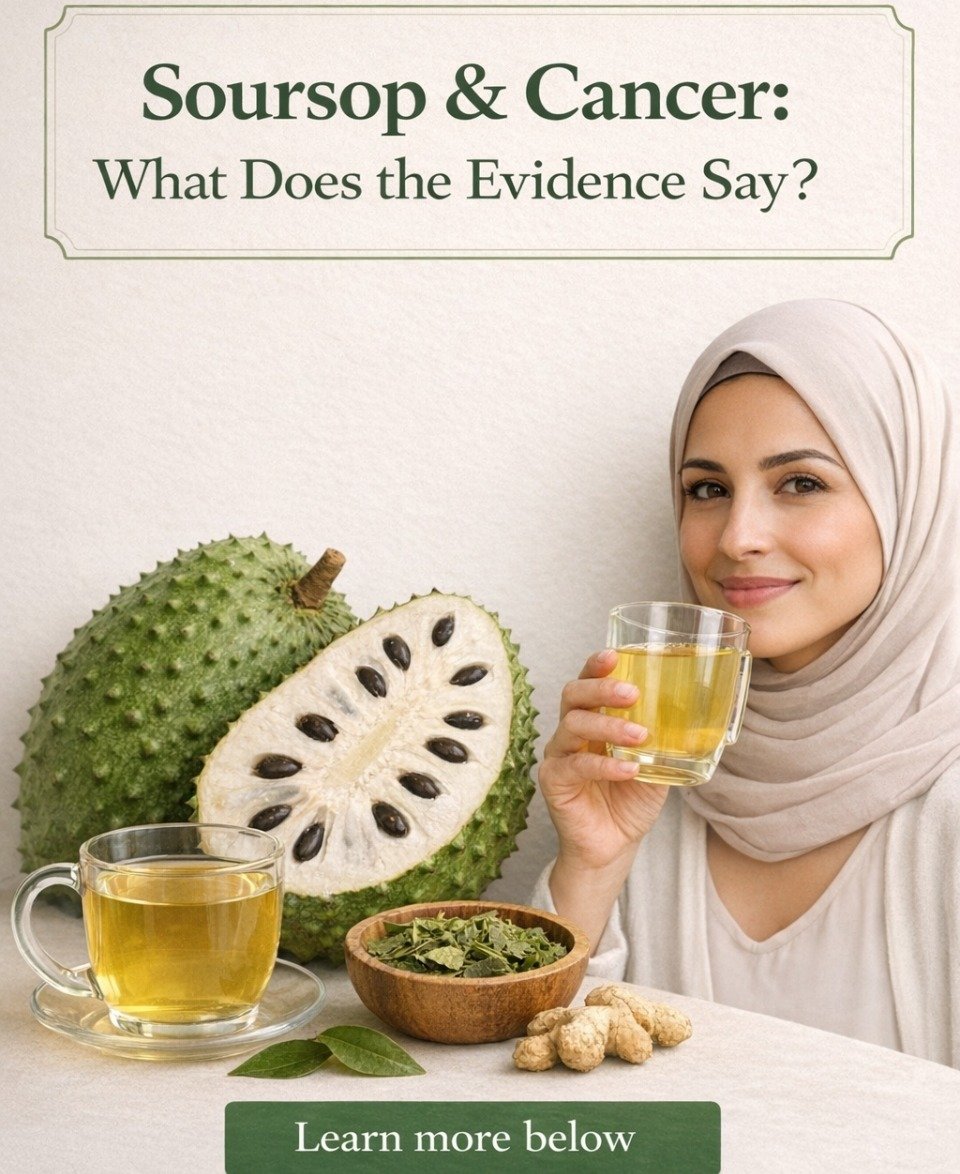
🍵 Is Drinking Soursop Leaf Tea Advisable?
If you choose to use it in a traditional manner, moderation is paramount.
For simple preparation:
-
Use 3–5 soursop leaves.
-
Add 2 cups of water.
-
Boil for approximately 10 minutes, then strain the liquid.
Regarding suggested use:
-
Consume ½ to 1 cup, 2–3 times per week (avoid daily intake).
-
Refrain from prolonged use without the supervision of a healthcare professional.
❗ Absolutely Do NOT use soursop tea without consulting a medical professional if you:
-
Are currently undergoing cancer treatment.
-
Have pre-existing neurological conditions or low blood pressure.
-
Are taking any regular prescription medications.
-
Are pregnant or currently breastfeeding.
🗣️ Effective Communication with Your Doctor
You can initiate a conversation with straightforward questions such as:
-
“Given my health, is consuming soursop safe for me?”
-
“Are there any potential interactions with my current medications?”
-
“Would it be best for me to consume soursop purely as a fruit?”
👉 This proactive approach helps ensure you make safe and well-informed health decisions.
🌟 Concluding Thoughts
Based on the current body of scientific evidence, soursop is not a confirmed cure for cancer. While it does contain compounds of scientific interest, the primary concerns arise from:
-
The spread of misinformation.
-
The promotion of unrealistic promises.
-
The dangerous act of replacing established medical treatments with unproven alternatives.
✔️ The most effective strategy for health and well-being includes:
-
Maintaining a balanced and nutritious diet.
-
Adhering to professional medical care and advice.
-
Exercising caution when considering concentrated herbal products.
💚 Genuine wellness is built upon informed choices, not on exaggerated or unsubstantiated claims.