 By admin
 Datura Stramonium: Miracle Herb or Deadly Temptation?
Imagine stumbling upon a plant with ghostly white, trumpet-shaped flowers swaying in the wind, its spiky seed pods whispering tales of ancient healers and forbidden rituals. This is Datura stramonium—also known as jimsonweed, devil’s trumpet, or thorn apple. Both enchanting and dangerous, this plant has occupied a controversial space for centuries. Its powerful alkaloids—atropine, hyoscyamine, and scopolamine—hold the potential to heal in tiny doses but can quickly descend into chaos when misused.
So, is Datura stramonium a hidden treasure of natural remedies, or a toxic trap awaiting the reckless? The truth lies in its paradoxical nature, making it one of the most fascinating and feared plants in history. Let’s explore its remarkable benefits, the serious risks, and why it demands both respect and caution.
🌍 What Exactly Is Datura Stramonium?
Datura grows wild across the world—from dusty roadsides in North America to forgotten fields in Asia and Africa. Belonging to the nightshade family, it shares a lineage with plants like tobacco and deadly nightshade, combining beauty with danger. Historically, it has appeared in Ayurvedic practices, Native American rituals, and even as a 19th-century asthma remedy when its dried leaves were smoked. Yet, its reputation in Europe leaned toward the dark, with hallucinogenic experiences often ending in tragedy.
Its chemical complexity is what makes it so intriguing. The same alkaloids that calm spasms or ease pain can, at higher doses, cause delirium or worse. For this reason, Datura has never been a “do-it-yourself” herb—it requires exact knowledge and professional supervision.
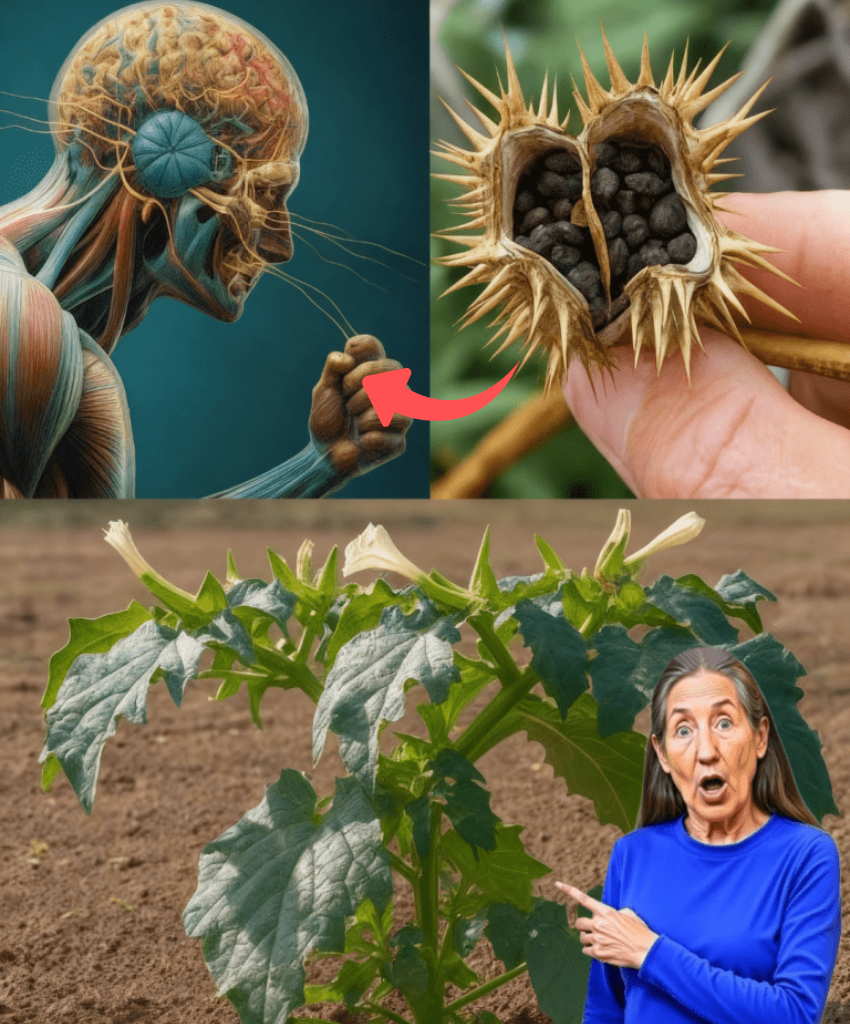
🌟 Five Reported Benefits of Datura Stramonium
⚠️ Important note: these potential benefits come only from controlled, professional applications. Self-medication with Datura is extremely dangerous.
-
Relief for Asthma and Breathing Difficulties
Historically, smoking Datura leaves provided relief during asthma attacks, thanks to scopolamine’s bronchodilator effects. Modern medicine has since replaced this risky practice with safe inhalers, but its role in respiratory care remains a fascinating chapter in herbal history. -
Pain and Muscle Relaxation
Traditional healers used carefully measured doses of Datura to ease arthritis, menstrual cramps, and even labor pains. Its alkaloids act as natural painkillers and muscle relaxants. Today, safer herbal remedies such as arnica or turmeric are far better choices. -
Antimicrobial Power
Extracts from Datura leaves have shown activity against harmful bacteria and were once applied to skin infections or wounds. While promising, safer options like tea tree oil or calendula are preferred today. -
Wound Healing and Skin Remedies
In some traditions, mixtures of Datura juice and oils were used on ulcers, boils, and stubborn skin conditions. Anti-inflammatory compounds played a role, but modern alternatives like aloe vera and neem provide similar benefits without the danger. -
Sedative and Sleep Aid
Due to scopolamine’s effect on the nervous system, Datura was sometimes used to calm the mind and induce sleep. Yet its unpredictability makes it far too risky compared with gentle herbs like chamomile or valerian root.
⚠️ The Dark Side: Risks of Datura Stramonium
The same qualities that give Datura its healing reputation also make it extremely hazardous:
-
Severe Toxicity – Even small miscalculations can cause rapid heartbeat, hallucinations, organ failure, coma, or death.
-
Hallucinations and Delirium – Unlike controlled psychedelics, Datura induces terrifying, disorienting visions that can last for days.
-
Cardiovascular and Neurological Risks – High doses disrupt the nervous system, leading to seizures, agitation, or respiratory failure.
-
No Safe Home Use – Its therapeutic margin is razor-thin, making unsupervised use essentially a gamble with one’s health.
-
Legal and Environmental Concerns – In some regions, cultivation and use are restricted due to its toxicity and history of abuse.
🌱 Safer Alternatives
-
Asthma relief: prescription inhalers only.
-
Pain and cramps: arnica, turmeric, or capsaicin creams.
-
Antimicrobial needs: tea tree oil, calendula, or honey-based salves.
-
Skin healing: aloe vera, neem, or comfrey.
-
Sleep support: chamomile tea, valerian root, or melatonin.
🌟 Final Reflections
Datura stramonium is both a healer and a destroyer, a living paradox of nature. Its history is filled with awe and fear, reminding us that the line between medicine and poison is often razor-thin. While its potential is undeniable, the risks far outweigh any self-directed experimentation.
Respect it, learn from its story, but leave its use to trained professionals. For most of us, Datura is best admired from a distance—an enigmatic symbol of nature’s beauty, power, and danger.